 NihongoDoya
NihongoDoya
NihongoDoya
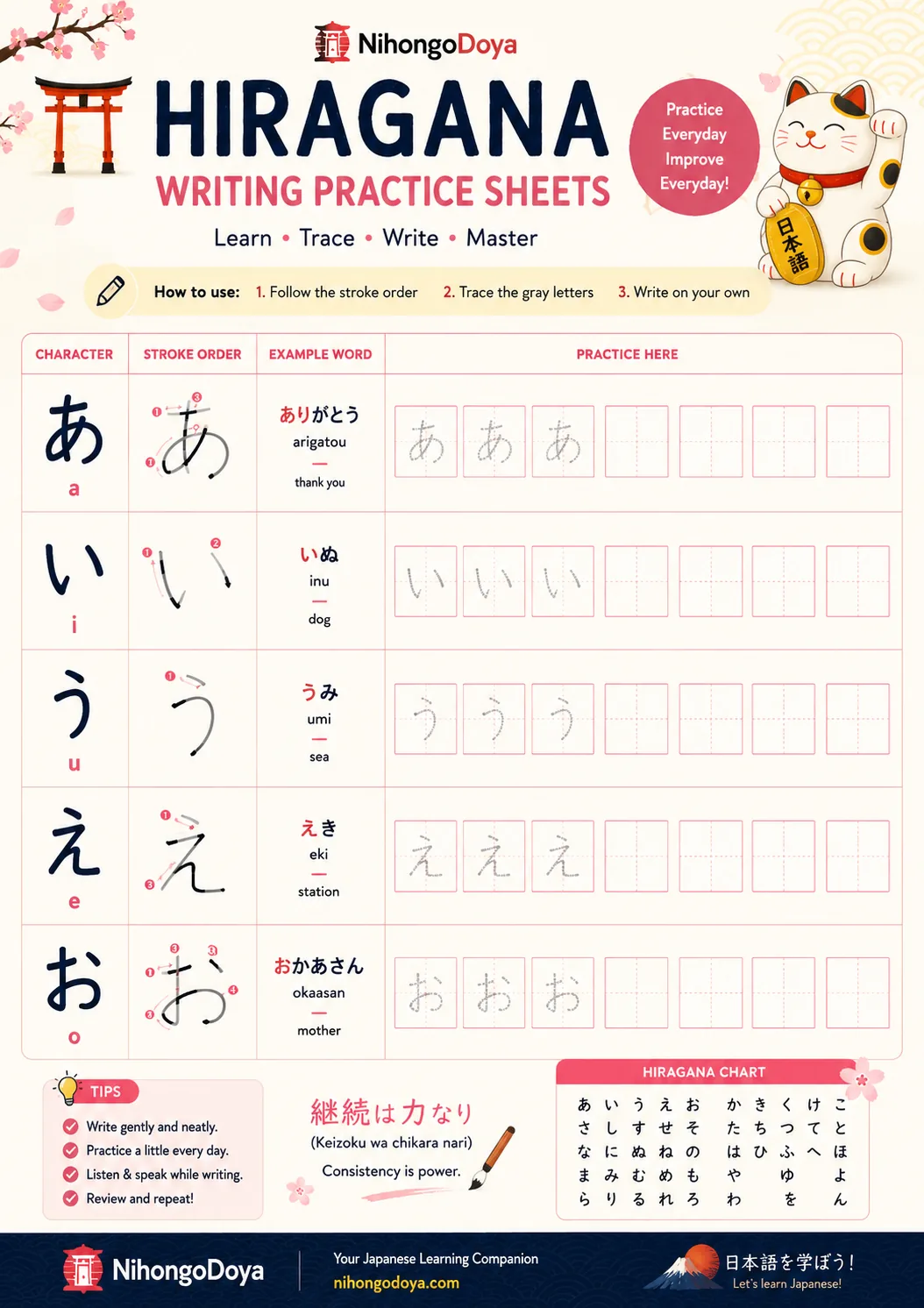
The same clean tracing worksheets for all 46 katakana, each paired with a real loanword (テレビ, コーヒー, ラジオ) so the shapes stick.
Katakana is the second script every learner needs. It is used for loanwords, foreign names, onomatopoeia and emphasis — so it appears constantly on menus, signs and product packaging in Japan. The angular shapes are quite different from hiragana and are best learned by hand.
These worksheets cover all 46 basic katakana with the same trusted trace-and-write format: a bold reference character, light-grey trace hints, and guide-lined practice boxes. Each character is paired with a familiar loanword — テレビ (TV), コーヒー (coffee), ラジオ (radio) — so you immediately see katakana doing its real job.
Because katakana shares its sounds with hiragana, it is best to learn hiragana first and then use these sheets to master only the new shapes. Say each sound aloud as you trace to lock the reading and the form together.
Here is what you will find inside the PDF to support your learning journey:
This resource is built with structured sections to target different aspects of your Japanese progress.
Master the sharp strokes that distinguish katakana from hiragana.
Learn 46 everyday katakana words used on real Japanese signs and menus.
Grey hints first, then blank boxes as your hand learns each form.
Practise the confusable シ/ツ and ソ/ン until you can tell them apart.
Romaji on each row reinforces the shared kana readings.
Reprint any row for extra review whenever you need it.
Designed specifically to address the pain points of beginner and intermediate self-study learners.
Clean A4 layout with generous writing space — print as many copies as you need.
You write the answers yourself, which fixes the material in memory far better than reading.
Every worksheet comes with a full answer key so you can self-check without a teacher.
Vector PDF that stays sharp on phone, tablet or paper — study on the bus or at your desk.
Whether preparing for tests or building practical skills, this resource fits your study roadmap.
The natural next step once you can read hiragana comfortably.
Trace hints and example words let you learn without a teacher.
Katakana unlocks menus, station signs and product labels almost immediately.
Follow these step-by-step methods to get the maximum educational benefit from the materials.
Got questions about using or printing this resource? Check out our quick answers below.
Yes, available with no signup. Download and print as many copies as you like.
All 46 basic katakana, each with a reference character, trace hints, practice boxes and a loanword example.
No. Learn hiragana first — it is more common in beginner material and shares the same sounds, which makes katakana much easier afterwards.
It is used for loanwords, foreign names and emphasis, so it appears constantly on menus, signs and packaging in Japan.
The stroke direction and angle differ. Writing them by hand — which these sheets make you do — is the fastest way to internalise the difference.
Yes, print fresh copies any time. Repetition is what makes the shapes automatic.
Laid out for A4; also prints cleanly on US Letter.
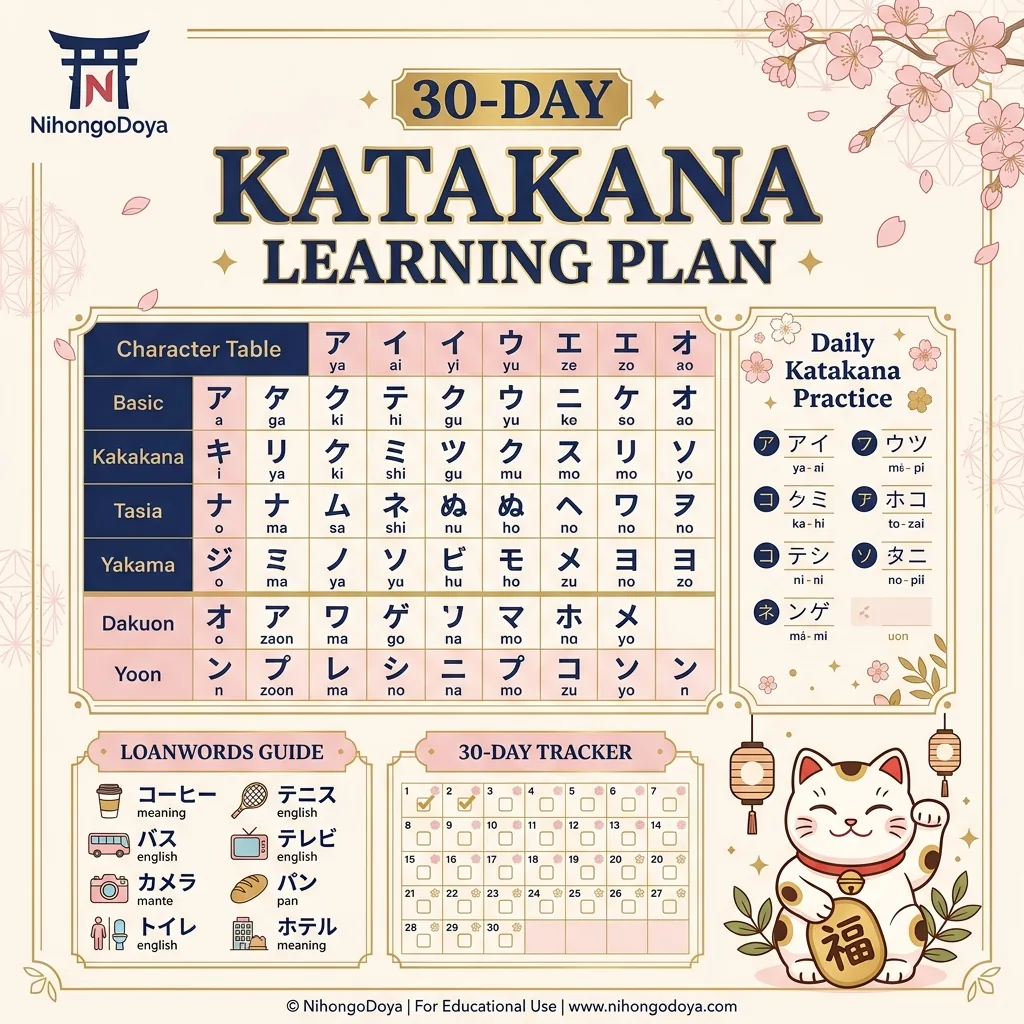
About one to two weeks at 25 minutes a day. Our 30-Day Katakana Plan gives an exact schedule.
Improve your reading, writing and grammar reference. available for every learner.
Download PDF© 2026 NihongoDoya. All Rights Reserved. For personal educational use only.
Complement your studies with these free matching guides and worksheets from NihongoDoya.