Set 48 concentrates on integrated workplace and public-service communication while still testing all four JFT-Basic sections. Take it under the full timer first. The set-specific situations then make your review concrete: identify whether each miss came from vocabulary knowledge, grammar, listening detail, or information search.
How this set mirrors the official test
The official JFT-Basic is a computer-based test of roughly 50 questions across four sections, scored on a 250-point scale with 200 points needed to pass. This mock follows that four-section structure question-for-question, so the rhythm of the real exam feels familiar on test day:
| Section in this mock | Questions | Official JFT-Basic section | What it measures |
|---|---|---|---|
| Script and Vocabulary | 12 | Script and Vocabulary (文字と語彙) | Recognising hiragana, katakana and everyday kanji; choosing the right word for pictures, blanks and descriptions. |
| Conversation and Expression | 12 | Conversation and Expression (会話と表現) | Completing dialogues naturally: grammar in context, set phrases, and choosing expressions that fit the social situation. |
| Listening Comprehension | 13 | Listening Comprehension (聴解) | Understanding announcements, instructions and short conversations about daily life and work. |
| Reading Comprehension | 13 | Reading Comprehension (読解) | Finding information in notices, menus, schedules, signs and short messages — the documents of daily life in Japan. |
Important honesty note: this is independent practice material written for NihongoDoya. It is not an official Japan Foundation test, and no mock score converts exactly to the official 250-point scale. What it can do is show you the format, the difficulty band, and — most usefully — exactly where you lose points.
Question types in set 48
| Question type | Count |
|---|---|
| Word Meaning | 2 |
| Word Usage | 3 |
| Kanji Reading | 4 |
| Kanji Meaning and Usage | 3 |
| Grammar | 6 |
| Expression | 6 |
| Comprehending Content (conversation) | 5 |
| Comprehending Content (shops and public places) | 5 |
| Comprehending Content (announcements and instructions) | 3 |
| Comprehending Content | 8 |
| Information Search | 5 |
Worked examples from this set
One real question from each section, with the correct answer marked and the explanation you will see after answering. (If you want to sit the set cold, take the test first and come back — these four questions appear in it.)
Script and Vocabulary — worked example
Choose the word that matches the picture.
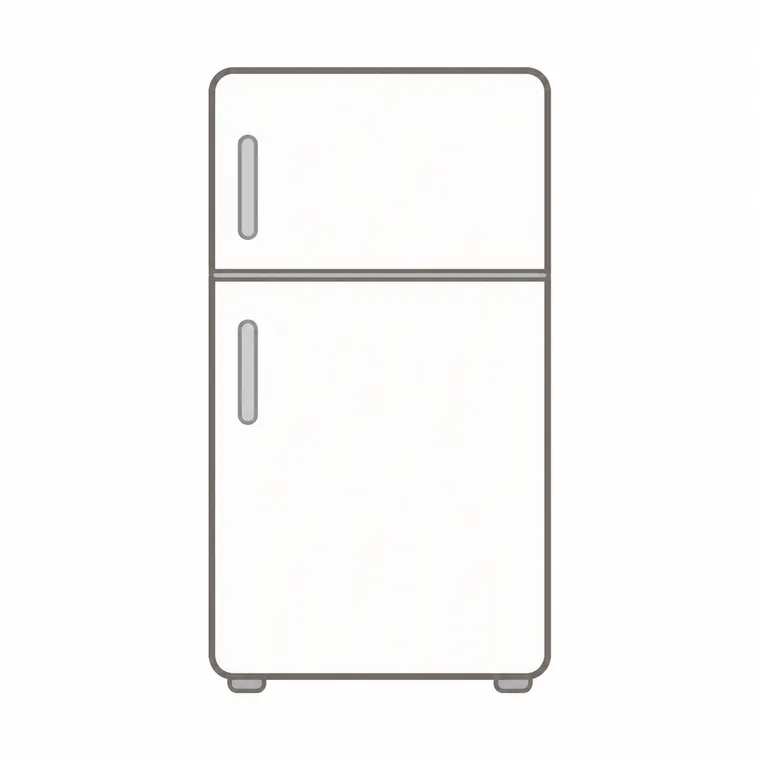
絵に合うことばはどれですか。
Why: れいぞうこ matches the illustration of a refrigerator.
Conversation and Expression — worked example
Choose the most natural expression for the situation.
Why: N + しか + negative means only that amount.
Listening Comprehension — worked example
Listen and choose the best answer.
🔊あおば市の会社の休憩室で、二人が話しています。♀買い物は土曜日にしましょうか。♂土曜日は雨だそうです。日曜日は晴れるので、日曜日がいいです。
二人はいつ買い物に行きますか。
Why: The man chooses Sunday because the weather will be better.
Script translation: Two people are speaking at the company break room in Aoba City. Saturday will be rainy, so they decide to shop on Sunday.
Reading Comprehension — worked example
Read the information and choose the best answer.
全部で いくらですか。
Why: 100 yen x 3 = 300 yen (300円).
Focus for this set: Integrated workplace and public-service communication
After the attempt, review the four section scores separately and revisit every explanation. For this set, make a short Can-do list from the situations you missed. Practise one original example for each weak point before moving to Set 49.
How to read your result
Every question in the set shows a full explanation after you answer, and the result screen breaks your score down by section. As a rough working guide for a 50-question set at this level:
- Under 30 correct — the fundamentals need more time. Work through the N5 grammar course and the N5 vocabulary lists before the next mock.
- 30–39 correct — you are in the borderline band where section-level drilling pays off most. Find your weakest section below and study it directly for a few days.
- 40 or more correct — you are handling this difficulty band well. Keep your rhythm with regular mocks and push your weakest section toward the others.
Fix your weakest section
- Script & Vocabulary — drill the JFT kanji by daily-life category and the N5 vocabulary lists.
- Conversation & Expression — review lessons 6, 14, 15 and 17 of the N5 grammar course (invitations, requests, permission, obligation), then take the particle practice test.
- Listening — use the listening practice tests daily; short and daily beats long and rare.
- Reading — train information-search with the reading practice tests and the printable N5 reading worksheets.
For the full preparation plan — schedules, section strategies and what to do in the final week — see the JFT-Basic study roadmap and the 90-day JFT roadmap PDF.
How these questions were written
All 2,500 questions across the 50 sets are original material written for this site, modelled on the public description of the JFT-Basic format: everyday and workplace situations, four options per question, and the four-section structure shown above. Every question carries an explanation, every listening item has a full script and translation shown after you answer, and instructions appear in English and Nepali because most of our readers study in Nepal. Errors do slip through — if you find one, report it and I will fix the set.
Written by Rahul Kumar Singh. Published 26 August 2026. Independent study material — not affiliated with or endorsed by the Japan Foundation. Official test information: format and scoring are described on the Japan Foundation's JFT-Basic website.